
Starting a career helping immigrant communities is a powerful calling, but it requires a clear roadmap. If you’re wondering “where can I find a comprehensive guide for new immigration consultants,” this is your starting point. The Latin American Immigration Association (LAIA) specializes in empowering individuals like you to provide essential, non-legal assistance with complete confidence and compliance.
Understanding Your Role: The Foundation of Your Career

Embarking on a journey to assist immigrants is an incredibly rewarding endeavor. This path is governed by strict legal and ethical rules designed to protect both you and the families you serve.
Success in this field is not just about filling out forms; it is about building a business grounded in trust, compliance, and genuine community impact. This guide will provide the clarity you need to achieve just that.
We will walk through the critical boundaries that separate legitimate, non-legal document assistance from the unauthorized practice of law. Understanding this distinction is the absolute bedrock of a long-lasting and successful career.
To give you a bird’s-eye view, here’s a quick summary of the core pillars we’ll be covering. Think of this as your cheat sheet for getting started on the right foot.
Quick Guide to Becoming an Immigration Document Preparer
| Pillar of Success | What It Means for You | Why It’s Critical for Your Business |
|---|---|---|
| Defining Your Role | Understanding the clear line between providing document help and giving legal advice. | Prevents you from accidentally breaking the law and builds trust with clients. |
| Understanding the Need | Recognizing the huge demand for affordable, ethical assistance in immigrant communities. | Helps you connect with your market and show how your services provide real value. |
| Getting Quality Training | Finding a training program that teaches practical skills and emphasizes strict compliance. | Equips you with the confidence and know-how to handle forms correctly and ethically. |
Each of these pillars is a building block for a business that is not only profitable but also a true asset to the community.
What This Guide Will Cover
This article is your personal GPS for a career in immigration services, designed to answer your biggest questions and provide clear, actionable steps. Here is what we will explore:
- The Role: We will clearly define what an immigration document preparer can—and just as importantly, cannot—do.
- The Need: We will explore the real, growing demand for ethical, non-legal assistance and what that means for you.
- The Training: We will show you how to identify high-quality training programs that focus on compliance and hands-on skills.
This is exactly what we specialize in at the Latin American Immigration Association (LAIA). We focus on giving entrepreneurs and community advocates the tools they need to offer valuable assistance while staying firmly within legal boundaries. For a deeper dive, you can learn more about what it means to be an immigration forms specialist in our detailed article.
Defining Your Lane: Document Preparer vs. Attorney

If there is one lesson every new immigration professional must learn, it is this: you must know the difference between being a non-legal document preparer and a licensed attorney. It is the most important rule of the road.
Think of it this way: you are a skilled and meticulous scribe, not a legal strategist. Both roles are incredibly valuable to the immigrant community, but they operate in separate lanes with firm legal boundaries.
For anyone building a career in this field, mastering this distinction is not just a best practice—it is a non-negotiable legal requirement. Your success and the safety of your clients depend on operating ethically within your role. Let’s draw that line with absolute clarity.
What Is the Role of an Immigration Document Preparer?
As an immigration document preparer, your job is precise and administrative. You are a service provider who helps clients accurately fill out official forms based on the information they provide. Your role is to prevent common errors, check for completeness, and make the submission process feel less intimidating.
Your authorized tasks are straightforward and focus on execution, not advice. You can:
- Translate: Accurately translate a client’s answers from their native language into English on an immigration form.
- Transcribe: Type the client’s self-provided information into the right fields on a form.
- Organize Documents: Help a client assemble their application package, ensuring all required documents are included and organized as USCIS specifies.
- Mail and Submit: Mail the completed application package on behalf of your client.
This administrative support is vital. It helps families avoid simple mistakes that can lead to frustrating delays or rejections, making the process smoother for people who find the paperwork overwhelming.
Critical Disclaimer: You must be upfront about your role from the very first conversation. LAIA and its affiliates do not provide legal advice or legal representation. Always include a disclaimer in your contracts stating that services are limited to non-legal document preparation.
What You Absolutely Cannot Do
Crossing the line into legal advice, even accidentally, can have severe consequences. You could face fines and legal action for the Unauthorized Practice of Law (UPL) and put your clients at serious risk. To protect your business and the people you serve, you must never do the following, as these actions are reserved exclusively for licensed attorneys.
Tasks Reserved for Attorneys Only:
| Action You Cannot Take | Why It’s Off-Limits for Preparers | Potential Consequences of a Mistake |
|---|---|---|
| Giving Legal Advice | You are not trained or licensed to interpret complex immigration law or advise on a client’s legal options. | Bad advice can lead to deportation or a permanent bar from entering the U.S. for your client. |
| Choosing Forms for a Client | Selecting the correct form is a legal decision based on an individual’s unique circumstances and eligibility. | Filing the wrong form wastes hundreds of dollars and months of time. Even worse, it could jeopardize a person’s legal status. |
| Representing Clients | You cannot speak for a client to USCIS, go with them to interviews, or argue their case. | This is the Unauthorized Practice of Law, a serious offense in every state. |
| Promising Outcomes | You can never guarantee an approval or a specific timeline. All final decisions rest with USCIS. | Making promises you can’t keep creates false hope and can be considered fraudulent misrepresentation. |
Your role is to empower clients by helping them with the paperwork for a path they have already chosen. An attorney’s role is to help them choose that path and fight for them along the way.
Why There Is a Growing Need for Ethical Immigration Assistance

To understand why a career in immigration document preparation matters, you have to look past the paperwork and see the people. Every day, families across the country begin a life-changing journey, often running into the wall of a confusing and intimidating immigration system.
This is not just a local problem; it is a global one. As more people seek to reunite with loved ones or build new lives, the demand for clear, ethical, and non-legal help is skyrocketing. This is a field where you can build a business that answers a real, heartfelt need in your community.
Bridging the Accessibility Gap
Many families who need to file a straightforward petition for a spouse or child do not require a full-service attorney. What they do need is affordable, trustworthy help to ensure their forms are filled out correctly and completely. This is the critical gap that ethical document preparers fill.
You become the bridge between a family’s personal information and the official government forms they need to submit. By doing this, you make the process more accessible and prevent simple mistakes that can cause months or even years of agonizing delays.
A Market with Purpose: The global immigration consulting services market was valued at about USD 15.9 billion in 2024 and is projected to reach approximately USD 26.4 billion by 2033. This growth reflects a powerful human need for skilled support.
This financial growth is tied directly to people’s lives. As more families work to reunite or build new futures, the need for competent, non-legal assistance will only climb, creating a sustainable and impactful business opportunity.
Why Ethical Practice Is the Foundation of Your Success
High demand for assistance also opens the door to misinformation and fraud. Sadly, unsuspecting families can fall victim to “notarios” or unethical consultants who make false promises and give dangerous advice, often with devastating results.
This is why your commitment to ethical, non-legal service is your single greatest asset. When you operate strictly within your defined role, you build a reputation based on trust and integrity. Clients will come to you because they know you’ll handle their sensitive information with care and honesty, without crossing into giving legal advice.
Your business becomes a safe harbor in a confusing system. This commitment is not just a legal requirement; it is a powerful way to stand out and build a loyal, trusting client base.
The Human Impact of Your Work
Behind every form is a family holding onto a dream of building a future together. A simple mistake on an application can delay a reunion, disrupt a child’s life, or create incredible financial and emotional stress. Your work directly prevents these problems.
Just think about the difference you make:
- You reduce stress. You bring clarity and confidence to people who are often overwhelmed by bureaucracy.
- You prevent delays. By ensuring every detail is accurate, you help applications move through the system smoothly.
- You empower communities. You offer a vital, affordable service that gives families the power to take control of their immigration journey.
Ultimately, by providing skilled document preparation, you are not just filling out forms. You are playing a crucial role in helping people navigate one of the most important moments of their lives.
How to Find the Right Training Program
When you search for a “comprehensive guide for new immigration consultants,” you are really looking for the most important investment in your new career: your education. Picking the right training program separates a compliant, trusted business from one that makes costly mistakes. Think of this as your buyer’s guide for finding a course that sets you up for long-term success.
Not all training is created equal. Some programs make wild promises or gloss over the strict legal boundaries of your role. A high-quality course will be laser-focused on compliance, practical skills, and ethical business practices from the start.
What to Look for in a Quality Program
As you evaluate your options, look for courses that give you more than a piece of paper. The best programs are built on a solid foundation of practical, real-world instruction that prepares you for what the job is actually like. This means they should dive deep into the specific forms you’ll be handling day in and day out.
Your training absolutely must prioritize hands-on, form-by-form instruction. It’s not enough to talk about immigration in general terms; you need a guide to walk you through the most common family-based and humanitarian forms, line by line. This is the only way to build the confidence and competence needed to serve clients accurately and ethically.
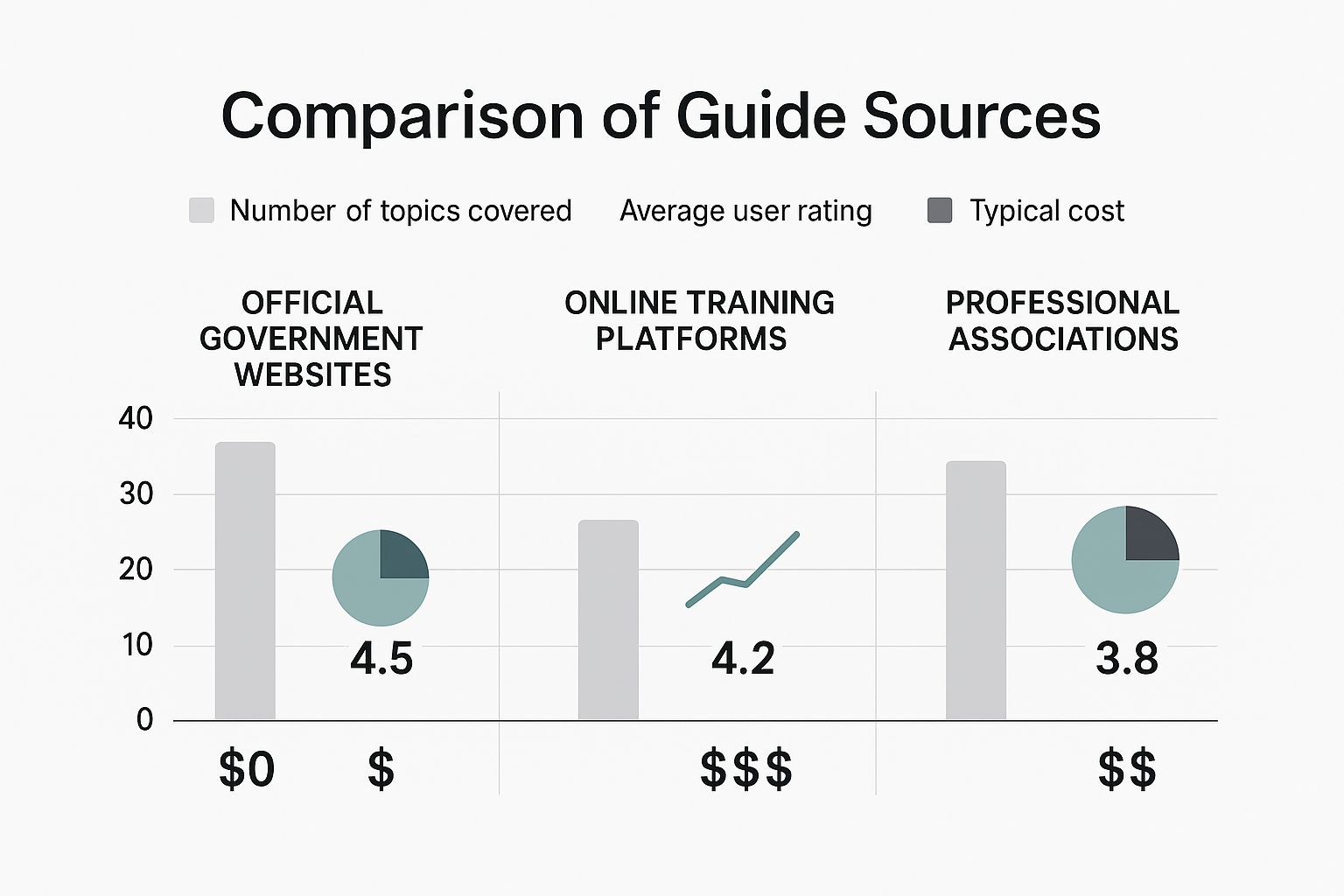
While government websites are free, a dedicated training program offers a much more complete and user-friendly learning experience.
Evaluating Immigration Document Preparer Training Programs
Use this table to compare key features of legitimate training programs against potential red flags, ensuring you choose a course that prioritizes compliance and ethical practice.
| Feature | What to Look For (Green Flags) | What to Avoid (Red Flags) |
|---|---|---|
| Curriculum Focus | Detailed, form-by-form instruction on common applications (I-130, N-400, etc.). | Vague descriptions like “learn immigration basics” with no specifics. |
| Ethical Guidelines | Strong, upfront emphasis on avoiding the Unauthorized Practice of Law (UPL). | Downplaying legal risks or making it seem like you can give “advice.” |
| Instructor Credentials | Taught by experienced professionals with verifiable backgrounds in the field. | Anonymous instructors or those with no real-world immigration experience. |
| Business Training | Includes modules on client contracts, marketing ethics, and office setup. | Focuses only on forms, with no guidance on running a compliant business. |
| Promised Outcomes | Empowers you to provide non-legal assistance within strict boundaries. | Promises you can be a “consultant” in a legal sense or guarantees client results. |
Choosing a program with all the green flags is your first step toward building a business that lasts.
Spotting Red Flags and Misleading Promises
As you compare programs, keep your guard up for any that make unrealistic claims. A legitimate course will never promise that you can act as a “consultant” in a legal sense or guarantee outcomes for clients. True education is about empowering you to operate confidently within the law, not bend it.
Here are some critical red flags to avoid:
- Vague Curriculum: The course description is fuzzy and lacks specifics about which forms or procedures will be taught.
- Promises of “Consultant” Status: It uses tricky language that suggests you’ll be able to provide legal advice or strategy.
- Downplaying Legal Risks: The training doesn’t have a strong, upfront focus on the Unauthorized Practice of Law (UPL) and ethical boundaries.
- No Instructor Credentials: The people teaching the course lack verifiable, real-world experience in the immigration field.
A heavy focus on compliance isn’t just a feature—it’s everything. A course that doesn’t spend significant time on what you cannot do is a serious liability to your future business.
The Importance of Business and Ethics Training
A top-tier program teaches you more than just how to fill out forms. It also guides you on how to build and run a compliant business from the ground up. This means practical instruction on setting up your office, creating client contracts with the right disclaimers, and marketing your services ethically.
Look for a curriculum that includes real-world business development. This knowledge is what turns your skills into a sustainable service that genuinely helps your community. To see what a curriculum built on these principles looks like, you can explore what many consider the best immigration consulting certification program available for non-attorneys.
The LAIA Advantage: Your Practical Training Solution
When you’re searching for a comprehensive guide, you need more than general advice. You need a hands-on, practical training program that prepares you for the work you’ll be doing. This is where the Latin American Immigration Association (LAIA) shifts from theory to real-world application.
Our approach is built on empowering bilingual individuals to serve their communities with confidence and strict ethical compliance. With the right education, you can build a successful business that provides vital non-legal assistance, bridging a critical gap for many families.
What Makes LAIA’s Training Different?
The LAIA training curriculum is structured around the tasks you will actually perform every day. We don’t just talk about immigration theory; we provide hands-on, step-by-step instruction for over 21 of the most common family-based and humanitarian immigration forms. This practical focus is what truly sets our training apart.
You will learn the mechanics of applications such as:
- Form I-130, Petition for Alien Relative: The foundational document for most family-based petitions.
- Form N-400, Application for Naturalization: Guiding lawful permanent residents on their final path to citizenship.
- Form I-485, Application to Register Permanent Residence or Adjust Status: A key form for those seeking a green card from within the U.S.
- Form I-765, Application for Employment Authorization: Helping clients secure the legal right to work.
This direct, form-by-form training ensures you are equipped not just with knowledge, but with the practical skills needed to assist clients from day one.
An Unwavering Commitment to Ethical Boundaries
According to USCIS data, the agency received over 10.9 million filings in fiscal year 2023, showing the immense demand for immigration services. This high volume underscores the responsibility you carry as a document preparer.
Because of this, our training program places an absolute premium on ethical boundaries. Every module reinforces the clear line between providing non-legal document preparation and the Unauthorized Practice of Law (UPL).
At LAIA, we teach you not only what to do, but more importantly, what not to do. Our curriculum is designed to protect you, your business, and the clients who place their trust in you by ensuring you never cross that line into giving legal advice.
This commitment to compliance is your greatest asset. It builds a reputation for integrity and becomes the foundation of a sustainable business that communities can rely on. For a detailed look at what this involves, check out our guide on the 10 essential steps to launch your immigration consulting business.
Frequently Asked Questions (FAQs)
Stepping into a new career always brings up questions. We’ve gathered some of the most common ones we hear from aspiring immigration document preparers to give you the clear, straightforward answers you need.
Q: Can I call myself an “immigration consultant?”
A: This is a critical distinction. The title “consultant” often implies giving advice, which is reserved for licensed attorneys. We recommend using precise, compliant titles like “Immigration Document Preparer” or “Immigration Forms Specialist” to accurately reflect your non-legal role and avoid the Unauthorized Practice of Law (UPL).
Q: Does LAIA provide legal advice or select immigration forms for me?
A: No. LAIA provides non-legal training in immigration document preparation. Our services are limited to teaching you how to translate, type, and submit client-provided information. LAIA and its affiliates do not provide legal advice, form recommendations, or legal representation.
Q: Do I need a special license to start this business?
A: This depends entirely on your state’s laws. Some states, like California, have specific registration and bonding requirements for immigration document preparers. It is your responsibility to research and comply with your local regulations. A quality training program will guide you on how to find this information. For more on this, read our guide on how to become a registered immigration consultant.
Q: How much can I earn preparing immigration documents?
A: Your income potential depends on your location, the services you offer, and your marketing efforts. Preparers typically charge a flat fee per form, ranging from under $100 to several hundred dollars depending on its complexity. Bundling this service with other offerings like tax preparation or notary services can create a strong, diversified revenue stream.
Q: What is the most important skill I need?
A: While attention to detail is crucial, the single most vital skill is unwavering ethical integrity. You must have the discipline to stay within your legal boundaries and never offer legal advice, even when asked. This commitment will build a rock-solid reputation and a sustainable business that genuinely serves your community.
Are you ready to build a business that empowers your community? The Latin American Immigration Association provides the practical, compliance-focused training you need to succeed. Learn more about our courses and start your journey today at https://latinimmigration.org.